
Trim
Johns Creek’s builder trim, swapped for real profiles
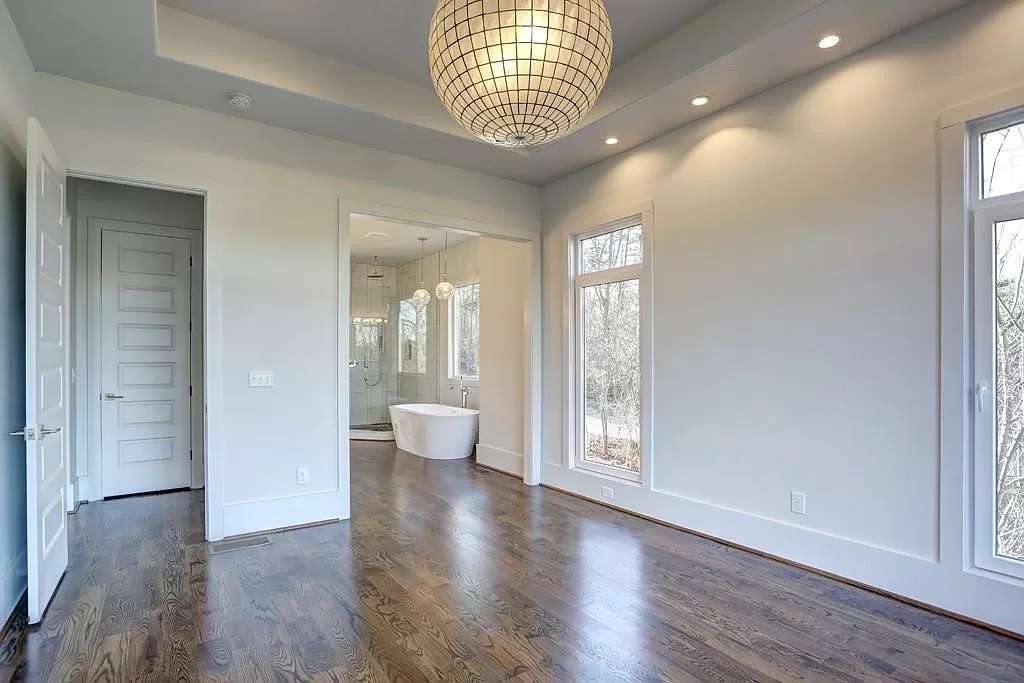
Taller baseboard, built-up casing and crown change a big room more than almost anything else we install. In Johns Creek they usually replace the trim package a builder priced into a late-nineties or two-thousands house: thin casing, short base, and caulk doing the work a good joint should.
What the builder left on the walls
Walk through a house from that era and the trim gives it away fast. Door and window casing is a narrow colonial profile, and the baseboard is short enough to look lost under tall ceilings. Cased openings between rooms are often just drywall wrapped around the corner. Most joints were closed with caulk rather than fitted, and years of seasonal movement have opened a lot of them back up.
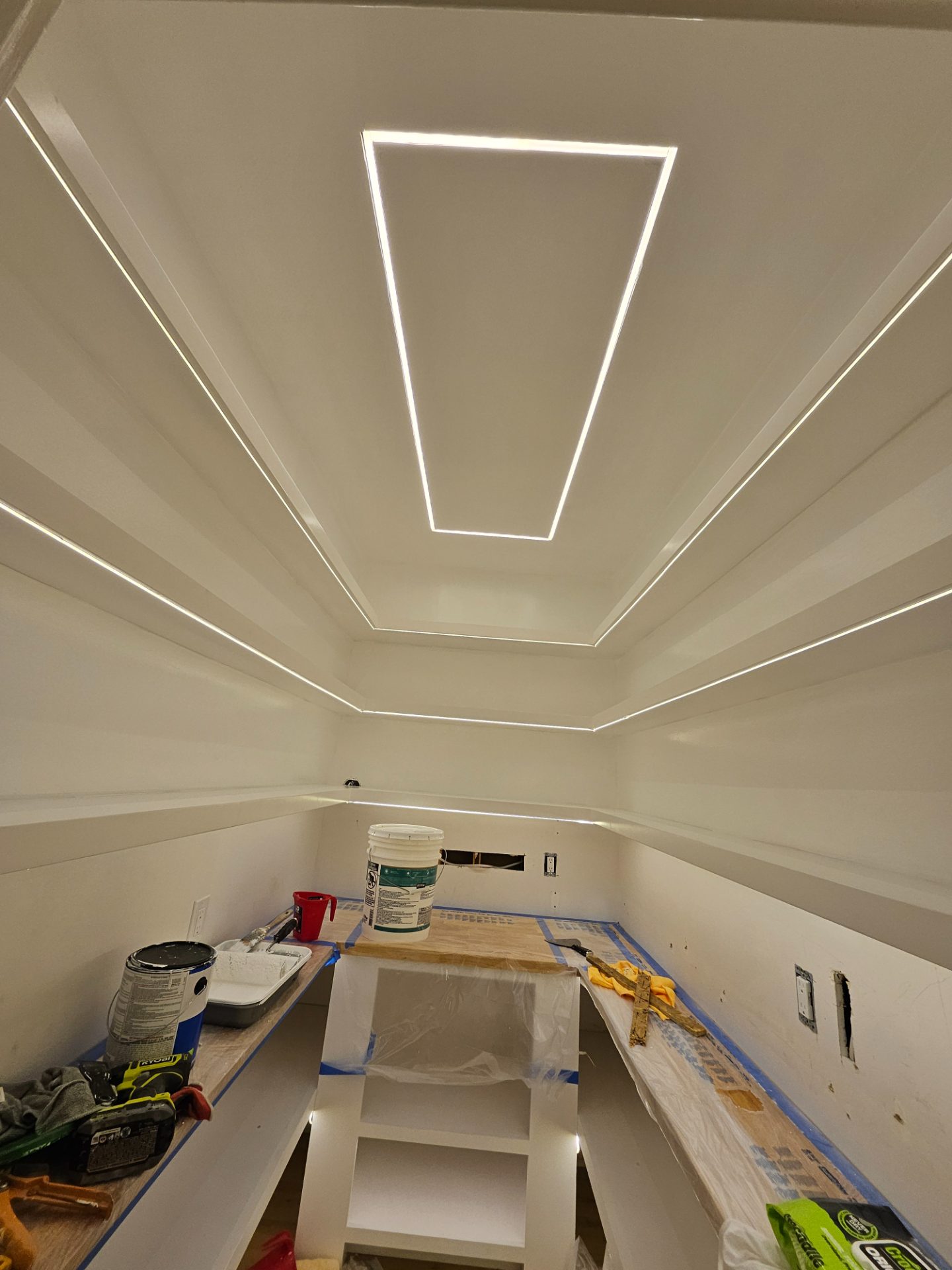
Often it is finger-jointed pine or thin MDF, primed at the factory and painted once on site. You can see the finger joints telegraphing through the paint on long runs of base, and the outside corners have taken years of vacuum cleaners and kids’ toys. It is what the builder’s budget allowed.
Trim is one of the few upgrades that changes how a whole floor reads without moving a wall or a pipe, which makes it a good fit for these houses. If you want the shop-wide version, our trim installation page has it. For everything else we do here, start at the Johns Creek page.
MDF or wood, and where each one belongs
We use both, and the choice depends on the room. Paint-grade MDF is stable and takes a smooth finish, which makes it a good choice for long runs of baseboard and wide flat casing in living spaces. Its weakness is water. Once the edge of MDF soaks up moisture it swells and never goes back.
So in bathrooms, laundry rooms and anywhere a mop or a wet dog meets the base, we install poplar or a PVC trim that paints the same way. Poplar also earns its place on stair parts, chair rail and anything people grab or bump, since it dents less and holds a crisp edge.
Inside corners get coped, with one piece cut to the profile of the other, because a mitered inside corner opens up the first winter the heat runs. Outside corners are mitered and glued. Where a wall leans out of plumb, the casing gets scribed to it instead of leaving a gap for caulk to bridge. That is slower, and it is the difference you see from across the room.
Where the upgrade usually starts
Most owners do not want every piece of trim in the house replaced at once. These are the jobs we get asked for most, roughly in the order people take them on.
Taller baseboard
New base runs taller and thicker than the old, often with a cap or a cove at the top. It needs a wall that is reasonably straight, so we shim where the drywall dips and scribe the bottom edge to a floor that is rarely level across a big room.
Built-up casing
Around doors and windows, a flat casing with a back band or a header cap gives the opening real weight. We build it in layers so each piece can be adjusted where the jamb and the wall disagree, which in these houses they usually do.
Crown and ceiling detail
Crown goes in last because it shows every flaw in the ceiling line. Tray ceilings get crown or a stepped band at each level, and a dining room or study can carry a simple coffered grid if the ceiling height allows it. We lay those out on the ceiling in pencil before anything gets cut.
Trim that has to meet something else
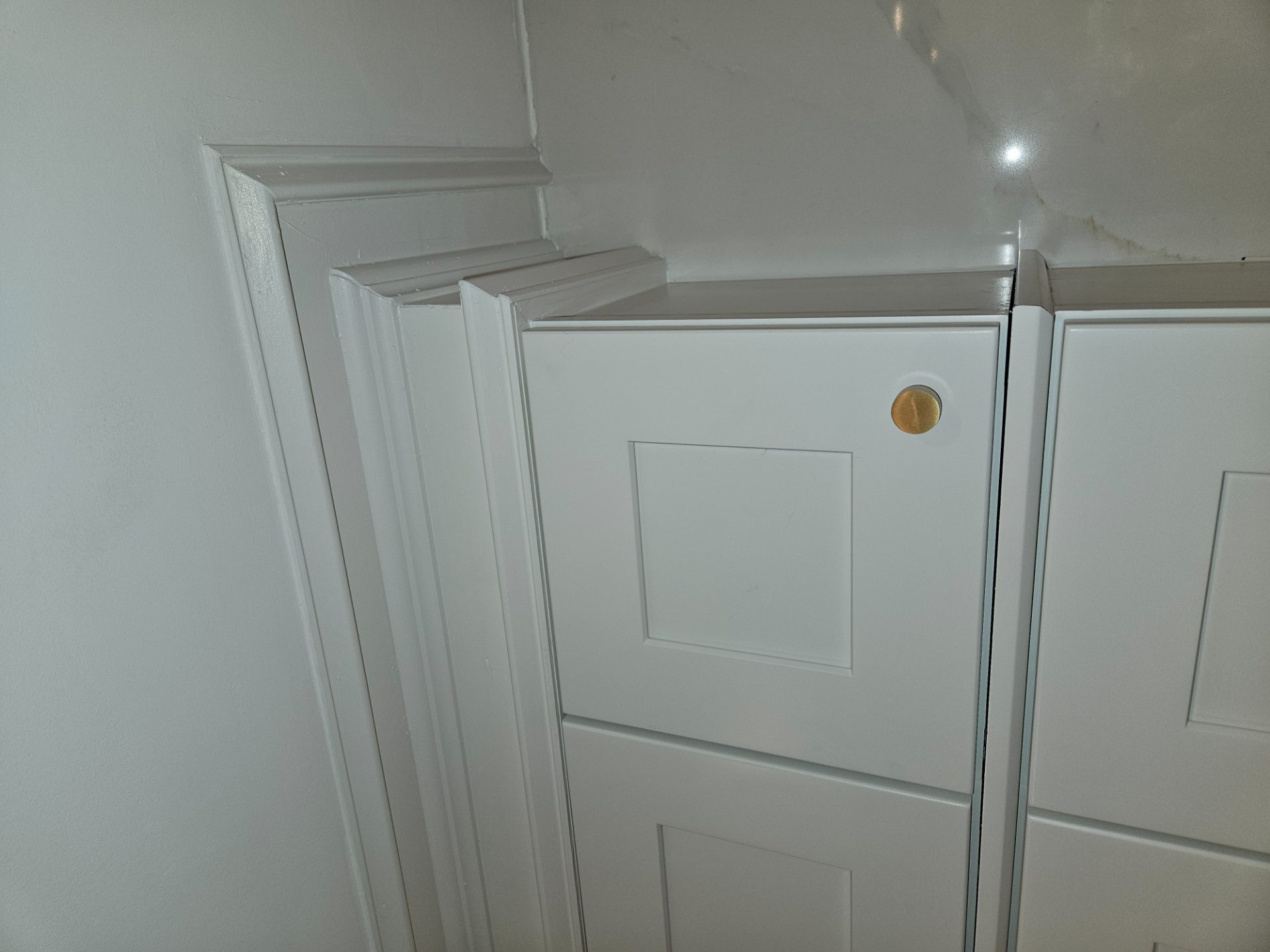
In the photo, built-up casing and crown return into a run of white shaker cabinet doors. That return is the fussy part of any trim job. The crown has to finish cleanly against the cabinets, and the casing has to line up with the cabinet faces so the two read as one piece of work.
Windows bring their own problems. Many houses from this period have drywall returns at the windows with a narrow stool or none at all, so adding real casing means building out the jamb first. We measure each window before ordering material, since no two jambs in a house are quite the same depth. Stairs are similar: the skirt board has to follow the treads, and new base has to meet it at the landing without a visible step in the profile.
If you are also changing cabinets, do the cabinets first and the trim after. Trim set against old cabinets that later come out leaves gaps and paint lines to repair. We set that order on any job where both are happening, and our Johns Creek cabinet installation page covers that side.
Finished means filled and painted
A trim job is not done when the last piece is nailed up. Nail holes get filled and sanded flush. Caulk goes only where trim meets drywall, in a bead thin enough to disappear, and never in a joint that should have been cut tighter. Then everything is primed and painted, usually in a semi-gloss or satin that wipes clean.
We include the painting because handing it to a separate crew is where trim jobs go wrong. A painter who did not hang the trim fills gaps with caulk instead of calling anyone back, and you end up with the builder look you were trying to leave behind. Our crew sets the trim knowing it will also paint it, and that changes how carefully the joints get cut.
Igor spent twenty years in the trade before starting SSRGA in 2021, and the point of the company was to take on fewer jobs and finish them properly. The same small crew is on your job from the first measurement to the punch list. Photos of finished rooms are in the gallery. When you are ready to talk about yours, use the contact page or call (678) 665-7771 and we will set up a walkthrough.
Where this is
Trim questions we hear in Johns Creek
Can you replace the baseboard without redoing the floors?
Yes, in most cases. The new base sets on top of the existing floor, and if the new profile is taller it covers the old paint line on the wall. Where the floor has gaps along the edge, we scribe the base down to close them, and shoe molding can cover what is left.
Will new trim look right if we keep our old interior doors?
Usually. Casing can be built up around an existing hollow-core or molded door, and a heavier casing often makes a plain door look better than it did. If you plan to replace doors later, tell us now, because swapping a door after new casing is up means pulling the casing again.
Should trim be MDF or real wood?
Both have a place. MDF stays straight and paints smoothly, so it works for most baseboard and casing in dry rooms. Bathrooms, laundry rooms and stair parts get poplar or PVC, since they see water or hard knocks. We will mark which rooms get which at the walkthrough.
Do you paint the trim, or do we need a painter?
We paint it. Filling, caulking, priming and the finish coats are part of every trim job we do, and the walls get touched up where the old trim left marks. If you want the walls repainted top to bottom, that is a separate conversation we can have at the walkthrough.
How messy is a trim job?
Less than most remodeling. The cutting happens outside or in the garage on a saw station, so the dust in the house comes mostly from sanding filler. We cover floors along the walls we are working on and clean up at the end of every day.
Can you add a tray or coffered ceiling to a flat ceiling?
A coffered look can be built onto most flat ceilings with beams and trim, as long as the ceiling is tall enough that it does not feel low afterward. A true recessed tray means cutting into the ceiling framing, which depends on what is above it. Igor checks the attic or the floor above before saying yes.
Bring Igor in to look at the trim
Pick the room that bothers you most and Igor will start there. He will tell you which profiles suit the house and, if you want to phase the work, which rooms to do first. Bring any photos of trim you have liked in other houses. The walkthrough costs nothing. Call (678) 665-7771 or send a message through the contact page.